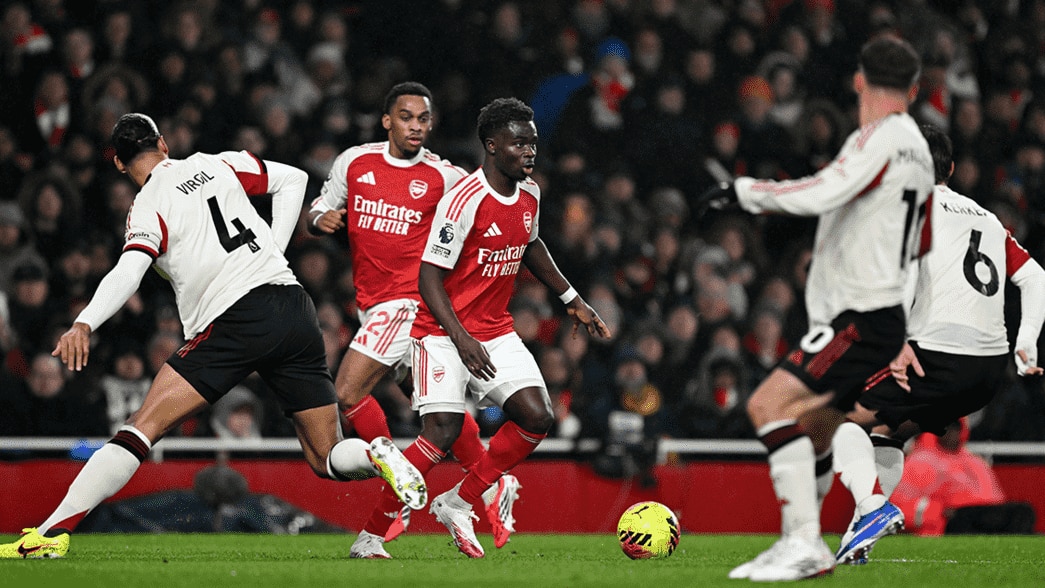
LONDON — After a bruising November night at Anfield that left Liverpool “bleeding,” the Reds have finally stemmed the flow. A ten‑game unbeaten run since that 4‑1 humiliation by PSV Eindhoven has steadied the ship, and Thursday’s gritty 0‑0 draw at Arsenal felt like progress. Yet beneath the clean sheet lies a nagging truth: Liverpool’s old attacking bite has not returned.
A resilient night at the Emirates
Arne Slot’s side arrived in north London and left with a point that felt earned. Conor Bradley rattled the crossbar in the first half, the closest either side came to breaking the deadlock, while Liverpool dominated the second half with 66% possession. The defence was disciplined, Alexis Mac Allister and Ryan Gravenberch controlled midfield, and Milos Kerkez produced arguably his best outing in a Liverpool shirt, nullifying Bukayo Saka’s threat.
Former Reds striker Daniel Sturridge praised the performance as “experienced” and “tenacious,” highlighting the team’s work rate and defensive solidity. For a side that had stuttered in recent draws, this was a night of tangible positives.
The missing focal point up front
Positives aside, the glaring absence was a recognised striker. Without Mohamed Salah, Darwin Núñez or Trent Alexander‑Arnold,, all of whom shaped last season’s dramatic moments — Liverpool lacked a focal point to finish moves. Hugo Ekitike’s fitness would have offered a different dimension; his absence left the attack blunt and the final ball wanting.
The result was stark: for the first time since March 2010, Liverpool failed to register a shot on target in a Premier League match, a worrying milestone in their 600th game since that drought began.
Numbers that tell a worrying story
The statistics underline the problem. Liverpool’s goals per game have dipped from 2.3 in recent seasons to 1.5 this term. Expected goals (xG) have fallen from 2.4 to 1.5, while shots per game have slid from 20.8 to 14.7 season on season. Shots on target have dropped from 7.3 to 4. Those figures reflect not just a temporary blip but a sustained decline in chance creation and attacking potency.
Tactical truth and the low‑block challenge
Slot has been candid about his team’s limitations against compact defences. The Emirates showed that possession alone does not equal penetration. “Against certain playing styles we struggle,” Slot admitted, acknowledging that breaking down low blocks remains a work in progress and a reason Liverpool trail the league leaders.
Last season’s 2‑2 thriller with Arsenal showcased a different Liverpool — one with incisive through balls and match‑defining moments. That trio of game‑changers who produced such magic are largely absent now, and the team is adapting to a new identity under Slot.
Stabilised but not yet complete
This season was meant to be a statement after a summer spend north of £400m. The title looks out of reach, and Slot has recalibrated expectations toward a top‑four finish. Yet Liverpool remain alive in the Champions League and the FA Cup, and the unbeaten run has at least restored belief.
Dominik Szoboszlai captured the mood succinctly: “We showed again why we became champions last season. This was a step forward.” The performance proved Liverpool can match the best on their day, but it also served as a reminder: solidity is back, the cutting edge is not. The next challenge is to turn stability into ruthlessness and rekindle the attacking spark that once defined them.































Comments
Sign in with Google to comment, reply, and like comments.
Continue with Google